Skin is the most accessible organ for light, which is one reason skincare has become red light therapy's best-known use. Reviews describe PBM as able to stimulate, heal and restore skin, with reported benefits for wrinkles, acne scars and burn healing, and a role in managing inflammatory conditions such as acne and psoriasis. The authors also highlight the near-complete absence of side effects.[1]
Wrinkles and elasticity
In a randomized, placebo-controlled, double-blinded split-face study, 76 patients with facial wrinkles were treated twice a week for four weeks with 830 nm, 633 nm, a combination of both, or sham light. All three active groups showed significant reductions in wrinkles (up to 36%) and increases in skin elasticity (up to 19%) compared with baseline. Skin biopsies showed more collagen and elastic fibres, and no adverse effects were reported.[2]
Collagen and skin texture
A larger controlled trial of 136 volunteers tested two light sources applied twice weekly. After 30 sessions, treated participants had significantly improved complexion and skin feeling, less roughness on profilometry and higher collagen density on ultrasound, and blinded photo assessment confirmed improvement versus controls. Interestingly, a broad polychromatic spectrum showed no advantage over red light alone.[3]
What this means for you
The evidence for cosmetic skin rejuvenation is encouraging and consistent in direction, but studies are relatively small and use specific protocols. Consumer masks and panels vary widely in wavelength and output, so results in trials are not a guarantee. Red light also complements — rather than replaces — daily sun protection and a good skincare routine.
Real results from the research
Photos from the studies behind this topic, shown unaltered with their protocols.
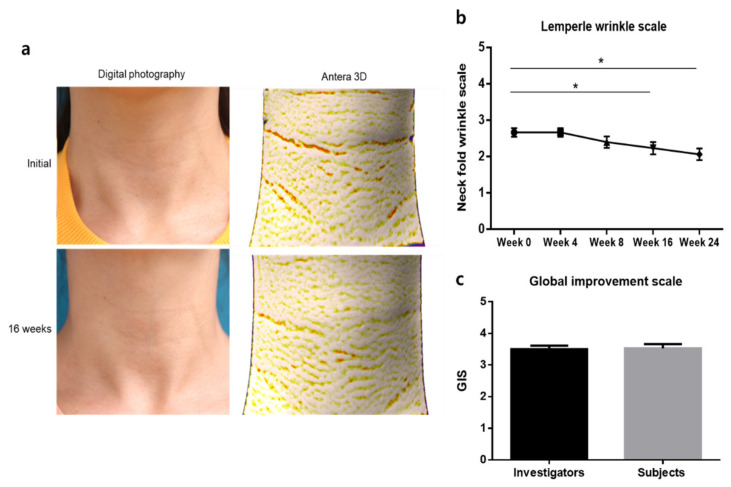
Neck wrinkles: clinical photographs and Antera 3D images at baseline and week 16, plus the paper's wrinkle-score charts (Figure 5, shown as published).
Protocol: Home-use LED neck device, daily application for 16 weeks.
Image: Lee YI et al., J Clin Med (2021), Figure 5 · CC BY 4.0 · Source ↗ · doi:10.3390/jcm10081774
Individual results vary. Shown unaltered, as published by the source.
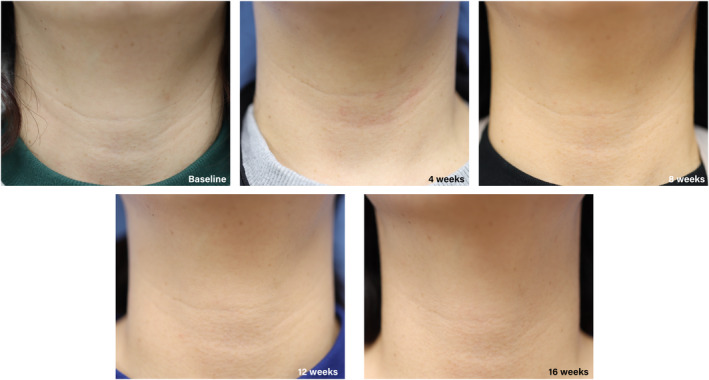
Neck wrinkles before and after device use (Figure 2, shown as published).
Protocol: Home-use LED neck device, 9 min/day, 5x/week, 60 sessions (randomized, sham-controlled trial, 70 participants).
Image: Park SO et al., J Cosmet Dermatol (2024), Figure 2 · CC BY 4.0 · Source ↗ · doi:10.1111/jocd.16599
Individual results vary. Shown unaltered, as published by the source.
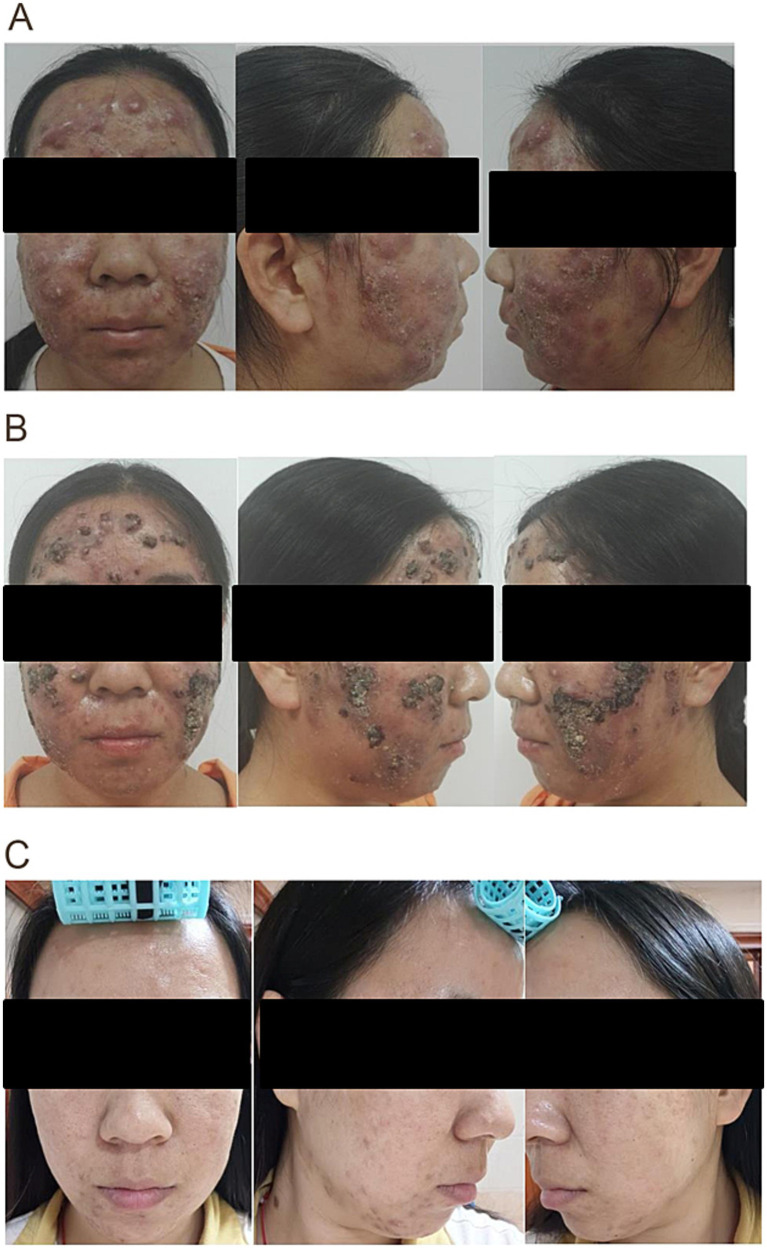
Severe acne conglobata in a 19-year-old: baseline (A), after 1 week (B) and at 8 weeks (C). Eyes masked by the authors.
Protocol: Red + blue LED phototherapy COMBINED with oral minocycline (the photos show the combination, not light alone).
Image: Hao Y et al., Front Med (2026), Figure 1 · CC BY 4.0 · Source ↗ · doi:10.3389/fmed.2025.1708077
Individual results vary. Shown unaltered, as published by the source.
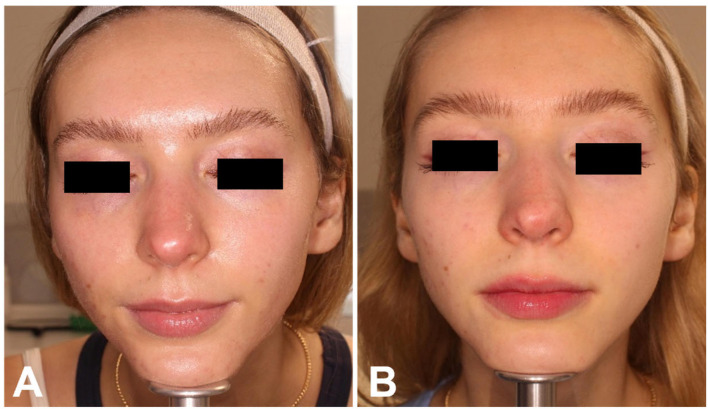
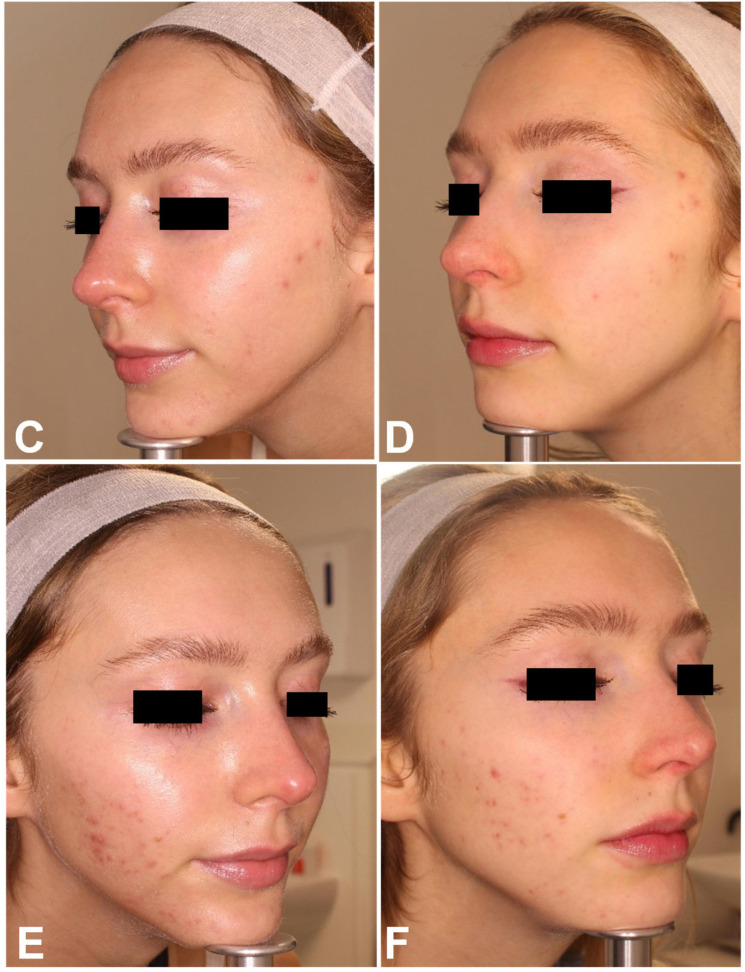
Active facial acne, female patient from the laser-only group: frontal and both profiles, before (A, C, E) and 3 months after the last session (B, D, F). Published as two image files; shown together, unaltered.
Protocol: In-clinic non-ablative 675-nm red-light laser, 6 weekly sessions (laser monotherapy group).
Image: Haus A et al., Healthcare (Basel) (2025), Figure 6 · CC BY 4.0 · Source ↗ · doi:10.3390/healthcare13233068
Individual results vary. Shown unaltered, as published by the source.
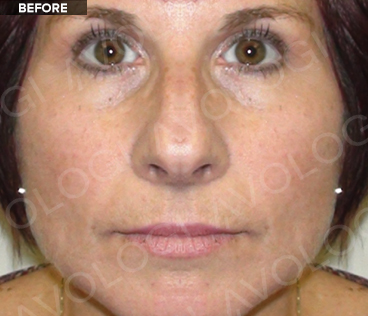
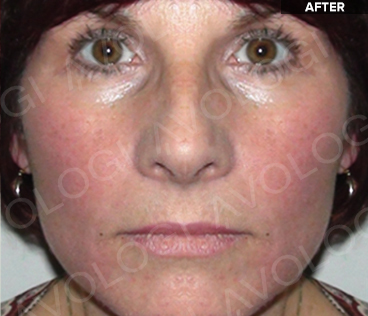 BeforeAfter
Full face (frontal): before vs after (labels are burned into Avologi's images).
Protocol: Avologi usability study as described on avologi.com/clinical-test: 25 participants; home-use Avologi Eneo device (LED arrays + contact heating), 3x/week for 8 weeks then weekly for 4 weeks. The page does not state which timepoint this specific pair shows.
Image: Avologi (avologi.com) · All rights reserved (brand marketing image) · Source ↗
Individual results vary. Shown unaltered, as published by the source.
References
- Avci P, Gupta A, Sadasivam M et al. (2013). Low-level laser (light) therapy (LLLT) in skin: stimulating, healing, restoring. Semin Cutan Med Surg. PubMed 24049929 · Free full text
- Lee SY, Park KH, Choi JW et al. (2007). A prospective, randomized, placebo-controlled, double-blinded, and split-face clinical study on LED phototherapy for skin rejuvenation: clinical, profilometric, histologic, ultrastructural, and biochemical evaluations and comparison of three different treatment settings. J Photochem Photobiol B. PubMed 17566756
- Wunsch A, Matuschka K (2014). A controlled trial to determine the efficacy of red and near-infrared light treatment in patient satisfaction, reduction of fine lines, wrinkles, skin roughness, and intradermal collagen density increase. Photomed Laser Surg. PubMed 24286286 · Free full text